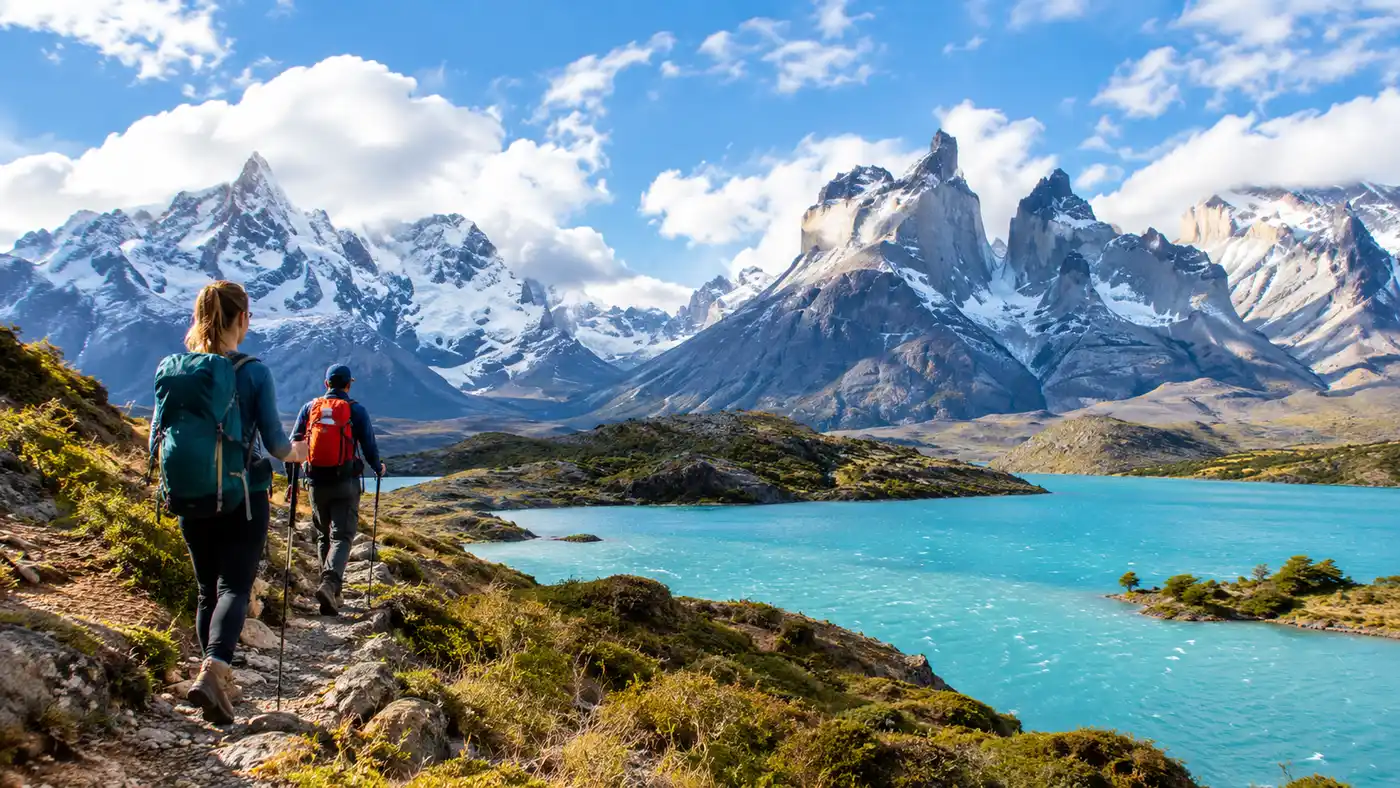
Torres del Paine Hiking and Trekking Guide
The wind in Chilean Patagonia does not just blow. It screams, knocks full-grown adults sideways into muddy bushes, and turns glacial spray into tiny stinging needles. Standing at the rocky base of the granite towers after a brutal four-hour morning climb, you forget the wind entirely. When you plan a trip centered on torres del paine hiking, you are signing up for raw, unpredictable wilderness, where four seasons collide across an afternoon, and every single ridge reveals another impossibly turquoise lake.
I spent weeks obsessing over logistics before my first trek here, and honestly, the planning is easily the hardest part of the entire adventure. The trail network inside the park is straightforward once your boots hit the dirt. Getting there, securing permits across competing private concession companies, and deciding between day trips or week-long backpacking loops can feel overwhelming. This guide breaks down the routes, costs, packing quirks, and gritty realities so you can hit the trails fully prepared.
Book your torres del paine tours experience:
Choosing Your Route: The Big Three Torres del Paine Hiking Options
You have three main ways to experience this landscape. Your choice depends on how much time you have, your tolerance for carrying 14 kilos of gear through gale-force winds, and whether you managed to book campsite reservations six months in advance. If you want a broader overview of park logistics, transit, and park entrance fees, check out our Complete Guide to Visiting Torres del Paine National Park before diving deep into trail miles.
The classic multi-day itineraries draw the biggest headlines. The W Trek covers the park highlights along the southern spine of the Paine Massif, while the O Circuit loops completely around the back of the range, swallowing the W along its second half. Day hikes offer total flexibility. You can sleep in a real bed in Puerto Natales or a lakeside hotel, skipping the heavy backpack entirely.
| Route | Distance | Typical Duration | Difficulty | Accommodation Style |
|---|---|---|---|---|
| Mirador Las Torres (Day Hike) | 21 km | 7-9 hours | Challenging | Day trip base |
| W Trek | 76 km | 4-5 days | Moderate to Hard | Refugios or Campsites |
| O Circuit | 136 km | 7-8 days | Strenuous | Tents only (back side) |
| Mirador Cuernos (Day Hike) | 6 km | 2 hours | Easy | Day trip base |
| Mirador Ferrier (Day Hike) | 6 km | 3-4 hours | Very Steep | Day trip base |
Which one fits you? If you love quiet trails, have 8 full days, and relish remote wilderness, the O Circuit is untouched magic. If you want the greatest hits without living out of a backpack for over a week, the W Trek hits every dramatic postcard vista.
Classic Multi-Day Routes: The W Trek and the O Circuit
The W Trek remains the heavyweight champion of Patagonian routes. Shaped like a lopsided W, the trail moves along three vertical valleys connected by a horizontal base path. Most hikers tackle it west to east, starting with a catamaran across Lake Pehoé to Paine Grande and finishing with the sunrise climb to the granite towers. Doing it east to west works just as well, though you tackle the steepest climb on day one when your pack weighs the most.
Hiking in Torres del Paine National Park along the W takes you into the French Valley. This hanging amphitheater sits wedged between hanging glaciers and dark horn-shaped peaks. You sit on a granite boulder, eating crushed trail mix, listening to the French Glacier roar like rolling thunder as ice falls off the cliffs across the chasm every 20 minutes. It feels alive. You then wrap around Lake Nordenskjöld toward the central sector, where the trail turns into rocky moraine before the final assault up the boulder field to Mirador Las Torres.
Pro tip: Hike west to east if you can. It leaves the iconic tower viewpoint for your final morning, and if bad weather rolls in early, you still have an extra day to attempt the viewpoint climb before catching your bus back.
The O Circuit is a different beast entirely. It adds the northern perimeter to the W, taking you away from the crowds into empty grasslands, swampy forests, and along the edge of the Southern Patagonian Ice Field. The crux of this torres del paine trek is Paso John Gardner. You climb through muddy woods, cross scree fields in sideways sleet, and crest an exposed ridge at 1,200 meters. The reward is Glacier Grey spreading below you like an endless frozen white ocean stretching into the horizon. It will make your knees shake. If coordinating the logistics for the full circuit feels daunting, there are several reputable outfits detailed in our guide to the best Torres del Paine trekking tours and guided trips that handle everything from gear transit to food drops.
Solo hikers often underestimate the wind on the back side of the circuit. Tent poles snap here regularly. You must pitch your shelter low, guy it out with boulders, and double-check every stake before crawling into your sleeping bag for the night.
Top Torres del Paine National Park Day Hikes
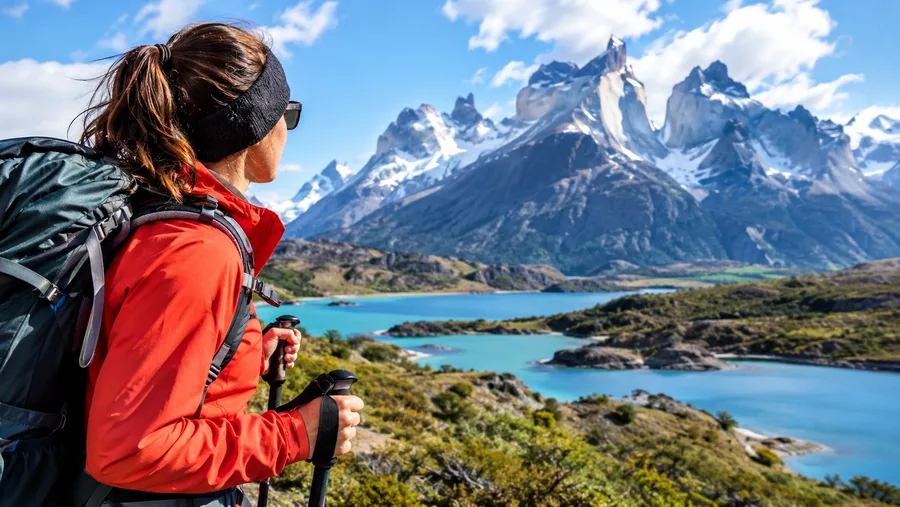
Not everyone wants to sleep on thin foam pads for a week. The park has exceptional day options that deliver equal visual drama with the luxury of a hot shower at night. You can rent a car in Punta Arenas or take public buses daily from the hub town of Puerto Natales, roughly two hours away.
- Mirador Las Torres: The crown jewel day hike. It covers 21 kilometers round trip with roughly 900 meters of elevation gain. The middle section through the windy Paso de los Vientos can feel endless, but the final scramble over giant moraine rocks brings you to the mint-green lagoon beneath the three iconic granite spires.
- Mirador Cuernos: A relaxed walk starting from Pudeto. In about two hours total, you pass the roaring Salto Grande waterfall and stroll along the edge of Lake Nordenskjöld to an open viewpoint right beneath the black-capped peaks of Los Cuernos.
- Mirador Ferrier: The steepest short grind in the park. Located near the Grey sector, this trail climbs 700 vertical meters in just 3 kilometers. The mud is relentless, but the summit viewpoint looks over an archipelago of icebergs, lakes, and the massive tongue of Glacier Grey.
Taking on torres del paine national park day hikes gives you flexibility with the volatile weather. If a storm rolls in from the Pacific, you can spend the afternoon drinking local Austral beer by a fireplace instead of shivering in a flooded campsite.
A smaller, often overlooked option is the hike to Cascada del Paine on the eastern fringe. It takes less than an hour, the path is completely flat, and you get unobstructed panoramas of the mountains reflected in the river with herds of wild guanacos grazing in the yellow grass beside you.
Book your torres del paine tours experience:
Booking Campsites and Refugios Without Losing Your Mind
Securing reservations is the most frustrating part of planning a torres del paine hike. You cannot simply show up with a tent and pitch it wherever you find flat ground. Wild camping is strictly illegal and will get you expelled from the park with a heavy fine. Every single night on trail must be booked months in advance, and trail rangers check your paper vouchers at every sector checkpoint.
The campsite system is run by three separate organizations. The national park service, CONAF, runs the free ranger stations, which have historically been closed for repairs or strictly capped. The remaining campgrounds and dorm-style refugios belong to two private companies: Las Torres Patagonia (formerly Fantástico Sur) on the eastern side, and Vértice Patagonia on the western and northern sides. Booking a continuous multi-day route requires alternating between their websites to match dates like a jigsaw puzzle.
Note: Campsite bookings for the peak season (December through February) typically open around June or July. Spots along the O Circuit can sell out within 48 hours of going live, so set calendar alerts early.
If you hike the W, you can book full board at the refugios. They hand you a packed lunch each morning and serve hot, carb-heavy three-course dinners in communal dining halls. It costs a small fortune - often upwards of $110 per night just for a dorm bunk and meals - but it cuts your backpack weight down to almost nothing. For campers, renting tents and pads directly at each site is an option if you prefer not to carry your own gear between sectors.
Essential Gear and Prep for Patagonia Trekking Torres del Paine
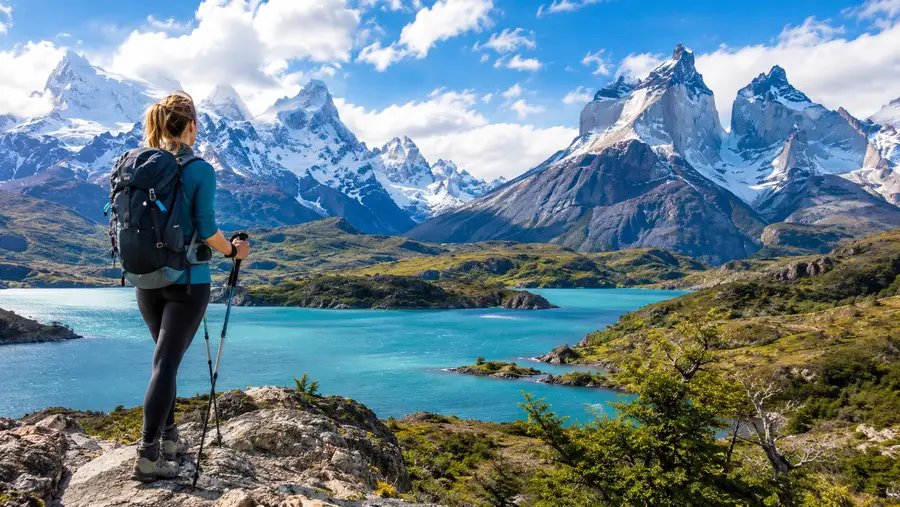
Packing for patagonia hike torres del paine routes requires a strict layering mindset. Cotton is your enemy. The moment sweat soaks into a cotton shirt, the Patagonian wind will chill you down to bone-shivering misery within five minutes. Synthetic or merino wool baselayers are non-negotiable.
- Bombproof outer shells: Bring a hardshell jacket rated to at least 20,000mm waterproofing with pit zips. Ponchos tear to shreds in 50 mph gusts.
- Sturdy trekking poles: The descents down the moraines and through the muddy forest roots will wreck your knees without poles. Make sure they have snow or mud baskets attached.
- Water filtration shortcut: Glacial streams flow everywhere inside the park. The running water is crisp, safe, and cold enough to hurt your teeth. Most hikers drink straight from the streams, though carrying a lightweight squeeze filter never hurts for peace of mind.
- Blister prevention: Pack plenty of moleskin, leukotape, and merino socks. Your feet will get wet from boggy trails, and wet skin shears quickly inside stiff boots.
Trail navigation is surprisingly simple. Trails are well-trodden, marked with orange blazes on rocks or wooden posts every few hundred meters. Losing the trail along the W is almost impossible unless heavy snow wipes out the route, which can happen even during mid-summer storms in January.
Condition your legs before leaving home. Stairs, weighted walks, and hill repeats make the difference between enjoying the view at Mirador Británico and limping into camp with destroyed calves.
Frequently Asked Questions about torres del paine hiking
What is the best month for hiking in Torres del Paine National Park?
The peak season runs from December through February, offering the warmest temperatures and up to 17 hours of daylight. November and March are fantastic shoulder months with fewer trail crowds, though nights dip close to freezing and winds can be fierce.
Can I hike Torres del Paine without a guide?
Yes. Both the W Trek and the day hikes are completely self-guided for any reasonably fit trekker. The trails are clear and marked. The O Circuit can also be done independently, provided you secure all required permits and carry suitable foul-weather gear.
How fit do I need to be for a Torres del Paine trek?
For the W Trek, you should be comfortable walking 6 to 8 hours daily over uneven, rocky terrain with elevation changes up to 900 meters. Carrying a heavy 15-kilogram backpack makes it considerably more demanding, so train with weighted packs beforehand.
Quick Reference
- Park entry fee: around $49 USD (3-day plus pass)
- W Trek length: 76 km over 4 to 5 days
- O Circuit length: 136 km over 7 to 8 days
- Gateway town: Puerto Natales (2 hours by bus)
- Camping booking window: opens June to July
Book your torres del paine tours experience:
Before You Tie Your Laces
Patagonia does not hand out easy days. You will get soaked by freezing horizontal rain, your shoulders will ache under the weight of your pack, and there will be moments halfway up a loose scree slope where you wonder why you paid good money to endure it. Then the clouds rip apart like paper, revealing vertical walls of blue-tinted ice and sheer granite towers piercing the southern sky. It makes every single blister worth the effort. Reserve your campsites early, pack your warmest layers, and step out onto the trail.
Read more about torres del paine tours.